Track, measure, and maximize brand reach in AI with LLM Visibility
Manick BhanManick BhanFounder CEO/CTO

From Research to Reach: Optimizing Academic Content for Search Engines

Search engine visibility defines the reach and influence of academic work. Scholarly content needs more than accuracy; it requires optimization that aligns with how algorithms rank and serve results. That is the purpose of SCHOLAR (Semantic Content Heuristics

Try Search Atlas

Search engine visibility defines the reach and influence of academic work. Scholarly content needs more than accuracy; it requires optimization that aligns with how algorithms rank and serve results. That is the purpose of SCHOLAR (Semantic Content Heuristics for Objective Language Assessment and Review). SCHOLAR is a feature designed to measure how readability, entity richness, crawlability, and topical authority affect discoverability. The feature matters because it quantifies what really drives query relevance, impressions, and traffic for academic materials.

We analyzed the SCHOLAR dataset to understand how different attributes influence performance in search results. The result? Topical authority, crawl frequency, clarity, and entity scores proved to be the strongest drivers of better rankings and higher traffic. Domain-level metrics played a smaller role. This report explains which features move academic content up the rankings, and why targeted optimization beats broad authority.

What Are the Key Takeaways?

This analysis set out to answer a critical question: What factors inside the SCHOLAR dataset most influence rankings of academic content?

The key findings are below.

  • Specific topical authority consistently drove the largest gains.
  • Crawl frequency correlated with higher impressions and traffic.
  • Content clarity and entity richness amplified query relevance and intent alignment.

The answer to whether domain-level authority outweighs topical precision is No. Focused expertise consistently mattered more than broad strength.
picture 1 From Research to Reach: Optimizing Academic Content for Search Engines

What Was the Methodology?

I, Manick Bhan, together with the Search Atlas research team, analyzed the SCHOLAR dataset with regression and correlation models to understand how scholarly content ranks. The dataset contained normalized and cleaned metrics covering seven main attributes: readability, clarity, keyword density, entity richness, topical authority, domain strength, and crawl frequency.

The tracked 3 categories of signals are below.

  1. Content signals: readability, clarity, keyword density
  2. Authority signals: topical authority, domain strength
  3. Crawl signals: crawl frequency, page size

Data was standardized with z-score normalization, median imputation for missing values, and outlier removal with interquartile range filters.

The 3 techniques are below.

  • Pearson and Spearman correlations to identify linear and monotonic relationships
  • Regression models to isolate the impact of topical authority, crawlability, and domain power
  • Coefficient visualizations to show direction and magnitude of effects

This three-layer approach ensured robust conclusions about what drives rankings.

Which Factors Mattered Most for Ranking Performance?

Across all metrics, optimized content achieved measurable improvements in visibility. The key takeaways are listed below.

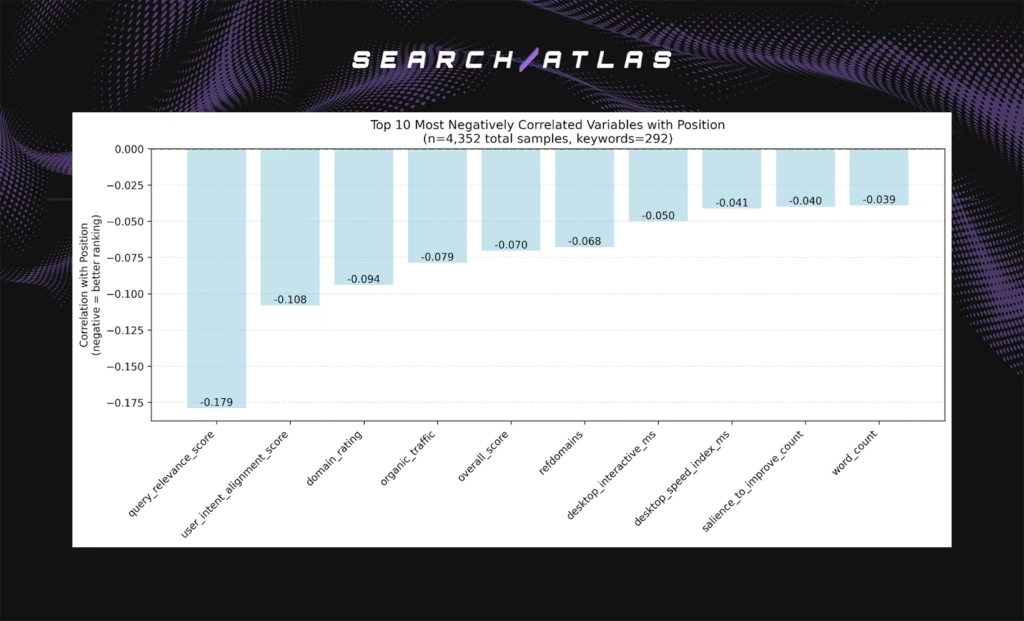
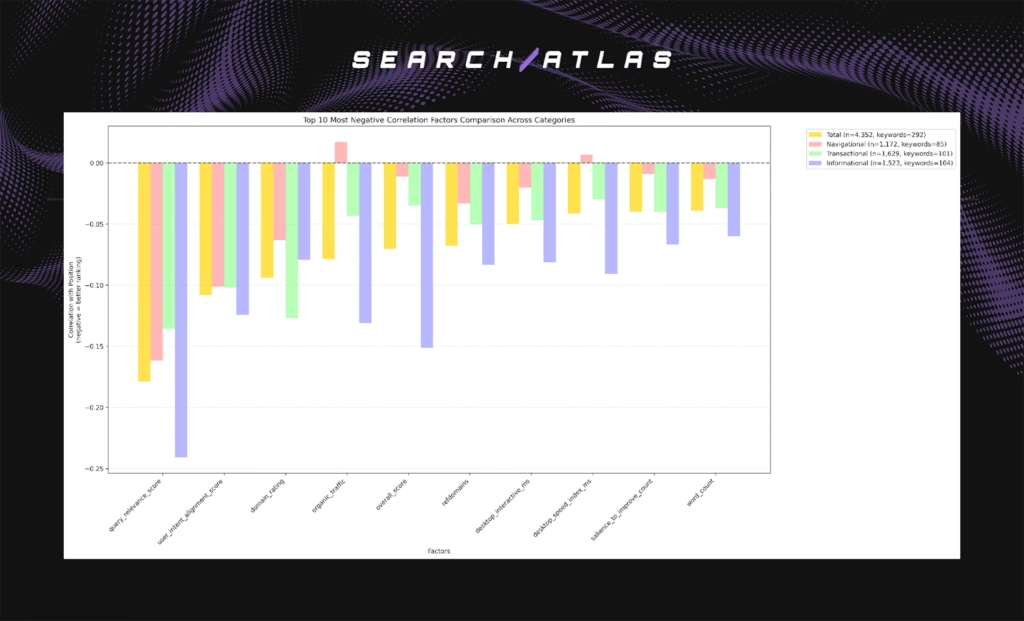
  • Query relevance and user intent alignment were most predictive of high rankings (−0.179 and −0.108 correlations).
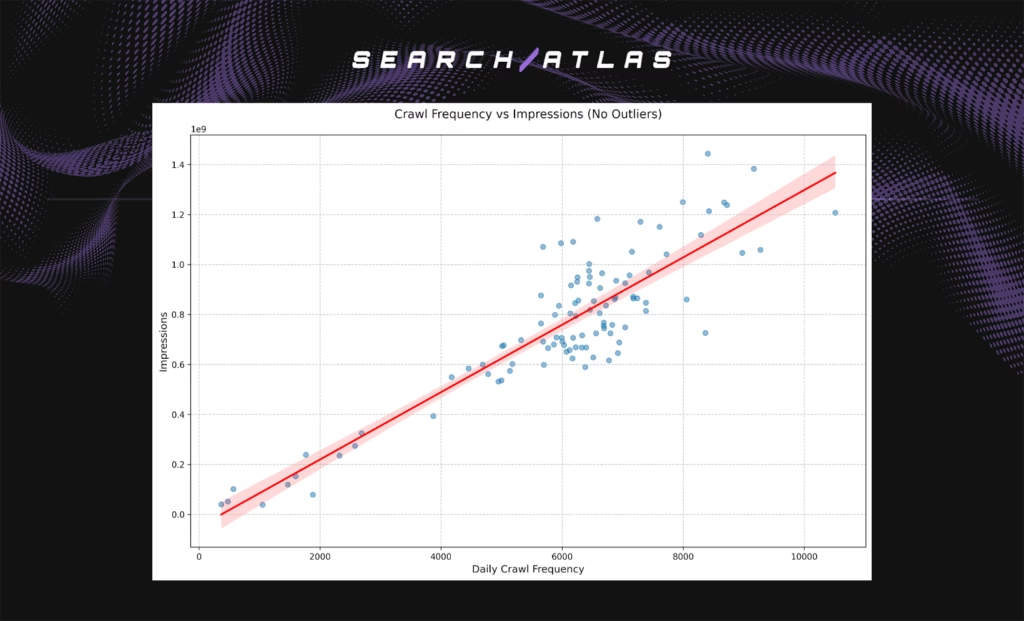
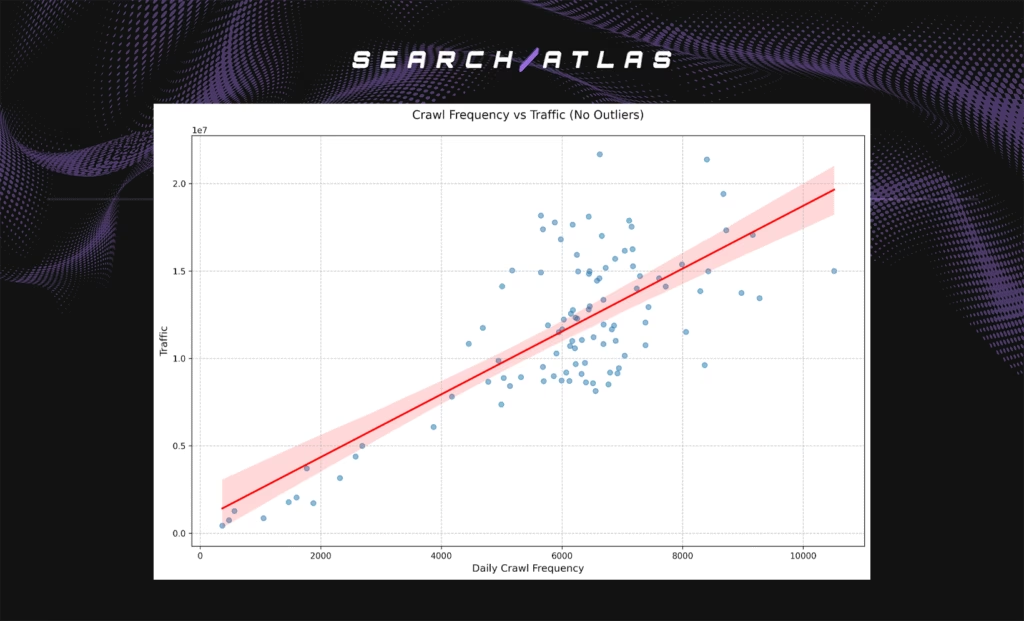
  • Crawl frequency showed a strong positive correlation with impressions and traffic. More crawls meant more visibility.
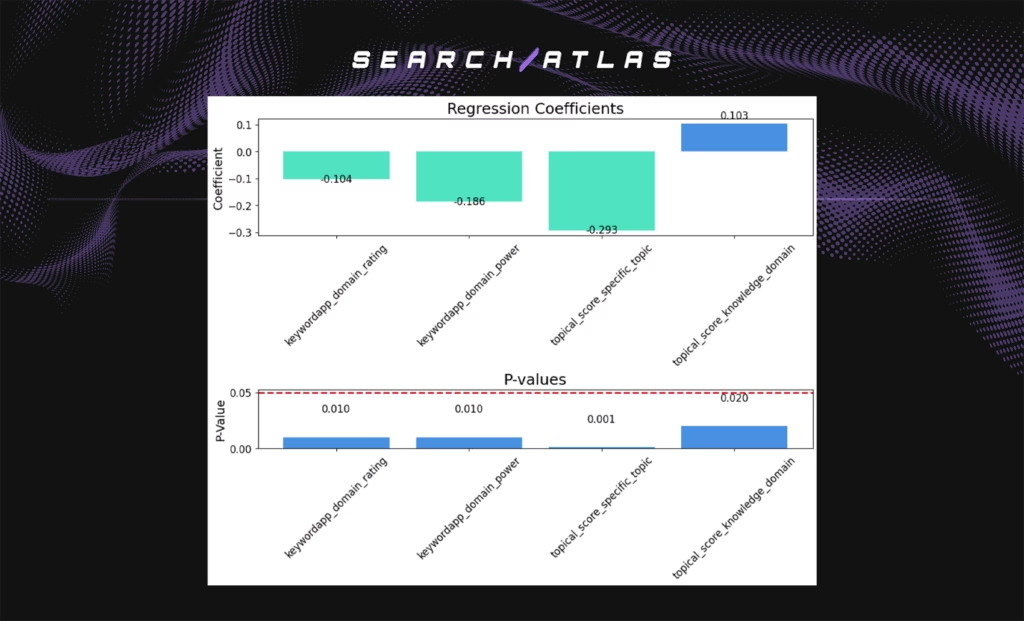
  • Topical authority at the specific subject level had the largest coefficient (−0.293), making it the single strongest predictor of rank.
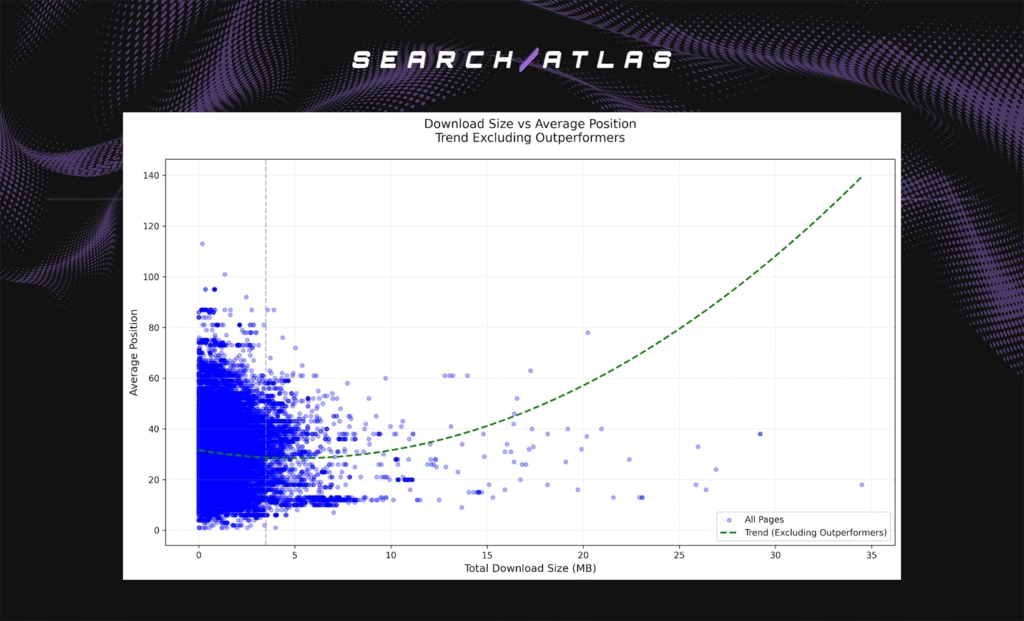
  • Page size above 5 MB correlated with worse outcomes, highlighting the tradeoff between content depth and performance.
picture 2 From Research to Reach: Optimizing Academic Content for Search Engines

How Did Query Alignment Influence Rankings?

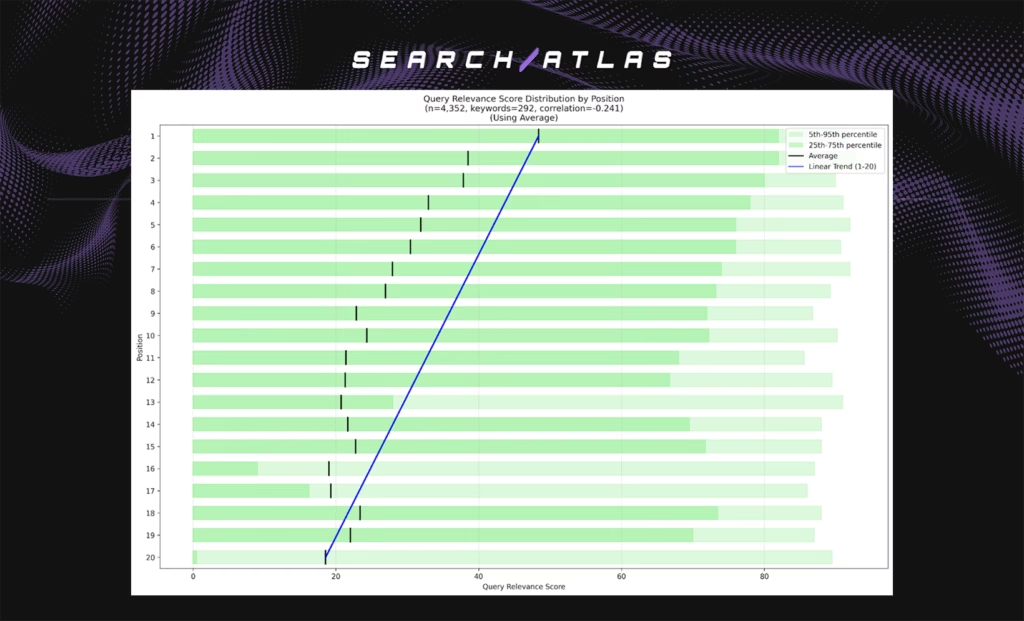
Pages with higher query relevance scores consistently ranked better. The key points of how query alignment influences rankings is below.

  • Query relevance correlated at −0.241 with ranking position.
  • Informational queries benefited most from high entity and clarity scores, while transactional queries gained from intent alignment.
  • Navigational queries showed weaker improvement, as brand-driven searches reduce the effect of optimization.
picture 3 From Research to Reach: Optimizing Academic Content for Search Engines

Why Did Crawl Frequency Impact Visibility?

Crawl frequency emerged as a decisive factor. The impacts of crawl frequency are below.

  1. Frequent crawling correlated with higher impressions.
picture 4 From Research to Reach: Optimizing Academic Content for Search Engines

  1. Frequent crawling correlated with increased organic traffic.
picture 5 From Research to Reach: Optimizing Academic Content for Search Engines

  1. Pages refreshed regularly were indexed faster and surfaced more often.

Pages with balanced size (1 MB to 5 MB) outperformed both lighter and heavier pages. Excessive size hurt rankings due to slower load times. Crawl frequency matters and excessive page size does not help.
picture 6 From Research to Reach: Optimizing Academic Content for Search Engines

What Was the Role of Topical Authority and Domain Power?

Topical authority was the strongest driver of rankings. The topical authority, authority metrics, and their correlations are below.

  • Specific topical authority (deep subject expertise) had the largest effect (−0.293 coefficient, p = 0.001).
  • Domain power contributed positively (−0.186, p = 0.010).
  • Domain rating also contributed (−0.104, p = 0.010).
  • Broad topical authority slightly worsened results (0.103, p = 0.020).
picture 7 From Research to Reach: Optimizing Academic Content for Search Engines

Depth matters most, breadth matters less, trust still contributes.

How Did Clarity and Entities Support Rankings?

Entity-rich, clearly structured content ranked higher because search engines could parse it more effectively. Entity richness improved query alignment, while clarity reduced ambiguity in results. Together, clarity, readability, and entities formed the triad of content quality that consistently correlated with ranking improvements.

What Can Academic Creators and SEO Specialists Do with These Insights?

Academic creators can align with Google’s E-E-A-T (Experience, Expertise, Authoritativeness, Trustworthiness) principles by applying the insights from this study. The path to visibility is not built on generic authority but on precise, clear, and frequently crawled content.

Picture of Manick Bhan
Manick Bhan

Founder CEO/CTO

Related Reads to Boost Your SEO Knowledge

Agentic AI: What It Is, How It Works and Why It Matters
AI SEO

Agentic AI: What It Is, How It Works and Why It Matters

Agentic AI is a type of artificial intelligence system designed to autonomously pursue defined goals through perception, reasoning, planning, and action with limited human supervision. The agentic AI definition combines generative artificial intelligence, pred

Algorithm Updates

Google Is Killing Dynamic Search Ads in September 2026 — Here's the Migration Plan

September 1, 2026: you cannot create new Dynamic Search Ads. September 30, 2026: every remaining DSA campaign is auto-migrated on Google's terms, not yours. You have 4 months. Use them. Announced at Google Marketing Live on May 20, 2026, the DSA sunset is the

Algorithm Updates

Google I/O 2026: The End of the Blue Link and What Replaces It

34-58% CTR drops. 60% zero-click rate globally. 1 billion monthly users on AI Mode from day one. This is not an incremental update — Google I/O 2026 was a declaration that the ten blue links era is over. Live globally: May 19, 2026, concurrent with the May 202

Algorithm Updates

May 2026 Broad Core Update: Google's Hardest Crackdown on AI Content Yet

40-80% traffic drops. 14-day rollout. Concurrent with the biggest search interface overhaul in Google's history. The May 2026 Broad Core Update is not a routine recalibration — it is Google's sharpest algorithmic statement yet on what "quality content" means i

Algorithm Updates

Meta Killed Legacy Advantage+ Campaigns on May 19 — Your Migration Checklist

May 19, 2026: if your Advantage+ Shopping or App campaigns were still using the legacy creation paths, they are now read-only or paused — and you did not choose that. This was the enforcement date Meta announced months in advance. The migration window closed.

Algorithm Updates

Meta's SilverTorch: The Andromeda-Class Engine Rewrite That Changes How Ads Get Delivered

22% ROAS improvement. 23.7x higher retrieval throughput. 291-523x faster filtering than CPU-based systems. On May 26, 2026, Meta deployed SilverTorch to its global ads fleet — and if you are still managing Meta campaigns the same way you were a week ago, you a

Agentic AI: What It Is, How It Works and Why It Matters
AI SEO

Agentic AI: What It Is, How It Works and Why It Matters

Agentic AI is a type of artificial intelligence system designed to autonomously pursue defined goals through perception, reasoning, planning, and action with limited human supervision. The agentic AI definition combines generative artificial intelligence, pred

Algorithm Updates

Google Is Killing Dynamic Search Ads in September 2026 — Here's the Migration Plan

September 1, 2026: you cannot create new Dynamic Search Ads. September 30, 2026: every remaining DSA campaign is auto-migrated on Google's terms, not yours. You have 4 months. Use them. Announced at Google Marketing Live on May 20, 2026, the DSA sunset is the

Algorithm Updates

Google I/O 2026: The End of the Blue Link and What Replaces It

34-58% CTR drops. 60% zero-click rate globally. 1 billion monthly users on AI Mode from day one. This is not an incremental update — Google I/O 2026 was a declaration that the ten blue links era is over. Live globally: May 19, 2026, concurrent with the May 202

Algorithm Updates

May 2026 Broad Core Update: Google's Hardest Crackdown on AI Content Yet

40-80% traffic drops. 14-day rollout. Concurrent with the biggest search interface overhaul in Google's history. The May 2026 Broad Core Update is not a routine recalibration — it is Google's sharpest algorithmic statement yet on what "quality content" means i

Algorithm Updates

Meta Killed Legacy Advantage+ Campaigns on May 19 — Your Migration Checklist

May 19, 2026: if your Advantage+ Shopping or App campaigns were still using the legacy creation paths, they are now read-only or paused — and you did not choose that. This was the enforcement date Meta announced months in advance. The migration window closed.

Algorithm Updates

Meta's SilverTorch: The Andromeda-Class Engine Rewrite That Changes How Ads Get Delivered

22% ROAS improvement. 23.7x higher retrieval throughput. 291-523x faster filtering than CPU-based systems. On May 26, 2026, Meta deployed SilverTorch to its global ads fleet — and if you are still managing Meta campaigns the same way you were a week ago, you a

Agentic AI: What It Is, How It Works and Why It Matters
AI SEO

Agentic AI: What It Is, How It Works and Why It Matters

Agentic AI is a type of artificial intelligence system designed to autonomously pursue defined goals through perception, reasoning, planning, and action with limited human supervision. The agentic AI definition combines generative artificial intelligence, pred

Algorithm Updates

Google Is Killing Dynamic Search Ads in September 2026 — Here's the Migration Plan

September 1, 2026: you cannot create new Dynamic Search Ads. September 30, 2026: every remaining DSA campaign is auto-migrated on Google's terms, not yours. You have 4 months. Use them. Announced at Google Marketing Live on May 20, 2026, the DSA sunset is the

Algorithm Updates

Google I/O 2026: The End of the Blue Link and What Replaces It

34-58% CTR drops. 60% zero-click rate globally. 1 billion monthly users on AI Mode from day one. This is not an incremental update — Google I/O 2026 was a declaration that the ten blue links era is over. Live globally: May 19, 2026, concurrent with the May 202

Algorithm Updates

May 2026 Broad Core Update: Google's Hardest Crackdown on AI Content Yet

40-80% traffic drops. 14-day rollout. Concurrent with the biggest search interface overhaul in Google's history. The May 2026 Broad Core Update is not a routine recalibration — it is Google's sharpest algorithmic statement yet on what "quality content" means i

Algorithm Updates

Meta Killed Legacy Advantage+ Campaigns on May 19 — Your Migration Checklist

May 19, 2026: if your Advantage+ Shopping or App campaigns were still using the legacy creation paths, they are now read-only or paused — and you did not choose that. This was the enforcement date Meta announced months in advance. The migration window closed.

Algorithm Updates

Meta's SilverTorch: The Andromeda-Class Engine Rewrite That Changes How Ads Get Delivered

22% ROAS improvement. 23.7x higher retrieval throughput. 291-523x faster filtering than CPU-based systems. On May 26, 2026, Meta deployed SilverTorch to its global ads fleet — and if you are still managing Meta campaigns the same way you were a week ago, you a

Visualize Your SEO Success: Expert Videos & Strategies

Ready to Replace Your SEO Stack With a Smarter System?

If Any of These Sound Familiar, It's Time for an Enterprise SEO Solution:

  • 25 - 1000+ websites being managed
  • 25 - 1000+ PPC accounts being managed
  • 25 - 1000+ GBP accounts being managed