The short answer: don’t worry too much. Algorithms are now better at understanding context and less reliant on keywords. 🧠
The long answer: There are still some things you should know about the number of keywords you should use for SEO, as well as rules for their placement.
For more in-depth insights into this, scroll down for the rest of the article, or use on-page audit tools to get the clearest possible answer, every time.
What Are SEO Keywords?
SEO keywords are the words and phrases people type into search engines when they’re looking for something: best coffee maker, how to start a podcast, or SEO tips for beginners. As a business, your job is to figure out which terms your audience is actually searching for, then use those words in your content so they can find you.
They help search engines understand what your page is about. But it’s not just about sprinkling words randomly. You want to use them where it counts—your titles, headers, meta descriptions, and naturally in your writing.
Think of SEO keywords as the bridge between your content and the people who need it. Choose them with purpose, and use them where they make sense.

What Types of SEO Keywords Are There?
Before you can decide how many keywords to use, you need to understand the different types. Some are meant to be your main focus, while others add context and depth.
Knowing the difference helps you choose the right mix without overloading your content or confusing your message. Here’s a quick breakdown of the key types to include.
Primary (Focus) Keywords
Your primary keyword (also called a focus keyword) is the main phrase you want a page to rank for. It should reflect the core topic of your content and match what your audience is searching for.
For example, if you’re writing a guide on podcasting, your focus keyword might be “how to start a podcast.” This keyword should appear in key spots like your title tag, meta description, headers, and throughout the body—naturally, of course.
Secondary Keywords
Secondary keywords support your focus keyword. They’re closely related terms or variations that help expand your content’s reach without straying from the main topic.
For a page focused on “how to start a podcast,” secondary keywords might include podcasting equipment, podcast hosting platforms, or recording tips for beginners. Including these gives your content more depth and improves your chances of showing up in a wider range of search queries.
Entities (Semantic Keywords)
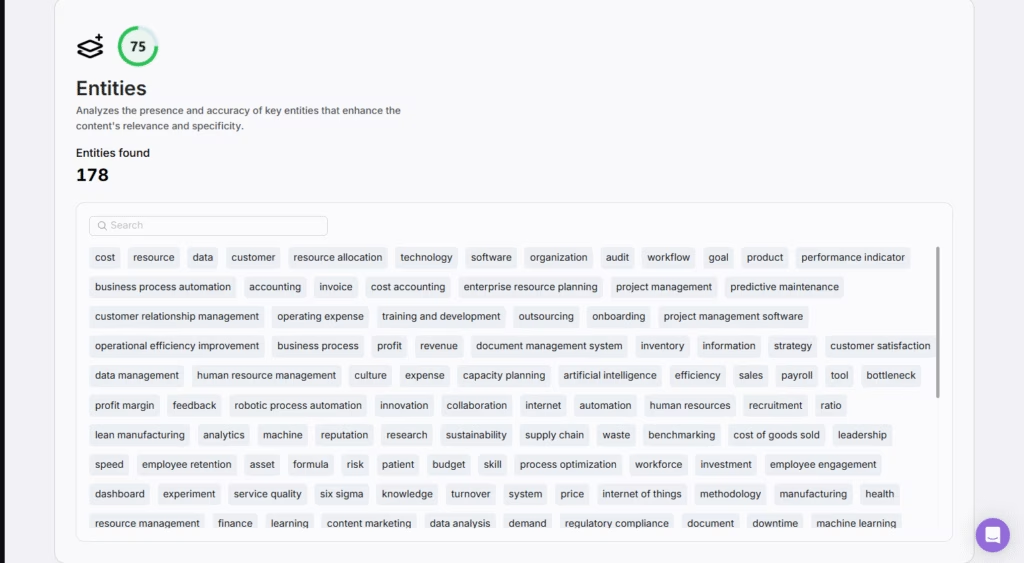
Entities are terms and concepts that search engines associate with a topic. They’re the people, places, tools, or ideas connected to your primary keyword.
For example, if your focus keyword is “email marketing,” related entities might include Mailchimp, open rate, or automation workflow. Including these naturally in your content helps Google understand the full context of your page, which can boost your search visibility.
You can view how well you used entities in our semantic grader tool, Scholar, which analyzes yours and your competitors’ content for quality metrics that matter to Google.
How Many Keywords Should I Use for SEO?
While the ideal keyword density (the ratio between the total number of words and keywords) is said to be between 1% and 2%, this is a somewhat outdated rule. 🦕
Google has evolved far beyond simple keyword matching. With the introduction of semantic search, the search engine now focuses on understanding the meaning behind words, not just the words themselves. Instead of matching exact phrases, Google looks at context, relationships between terms, and user intent to deliver the most relevant results.
This shift means the number of keywords you use isn’t as important as it used to be.
As long as your content provides valuable, relevant information and uses keywords in context, you no longer need to obsess over the perfect keyword-to-word ratio.
What Search Engines Really Want: Topics, Not Just Keywords
Before diving into numbers, it’s important to understand that search engines—especially Google—have evolved. They’re not just scanning your content for keyword matches anymore.
Instead, they want to see that your content comprehensively covers a topic and satisfies user intent. This means it’s less about how many keywords you use and more about how well you address what a searcher is looking for. Relevance, context, and clarity are what matter most.
How to Choose a Focus Keyword
Every piece of content should have one clear focus keyword. This is the term that best represents what the page is about and aligns with what your audience is searching for.
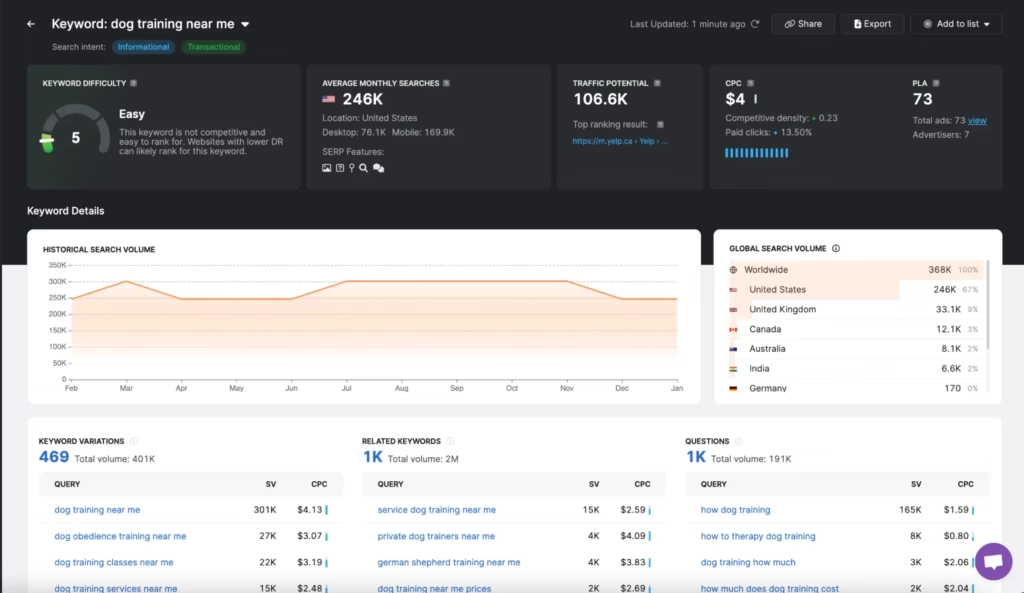
To choose the right focus keyword for your content, start with a solid keyword research strategy. This means understanding your audience, knowing what they search for, and selecting keywords that align with your business goals.
Using a keyword research tool can help identify the best keywords by showing how frequently they’re searched and how competitive they are. It will also help you find supporting terms you can use.
Also, it’s essential to understand search intent, which is the reason behind a user’s search. This ensures you’re targeting keywords that match what your audience is looking for.
Supporting Keywords: How Many Are Too Many?
There’s no magic number, but most well-optimized content includes 3-5 supporting keywords. These are terms that are semantically related or commonly searched alongside your main keyword. They help reinforce relevance and improve your chances of ranking for multiple queries.
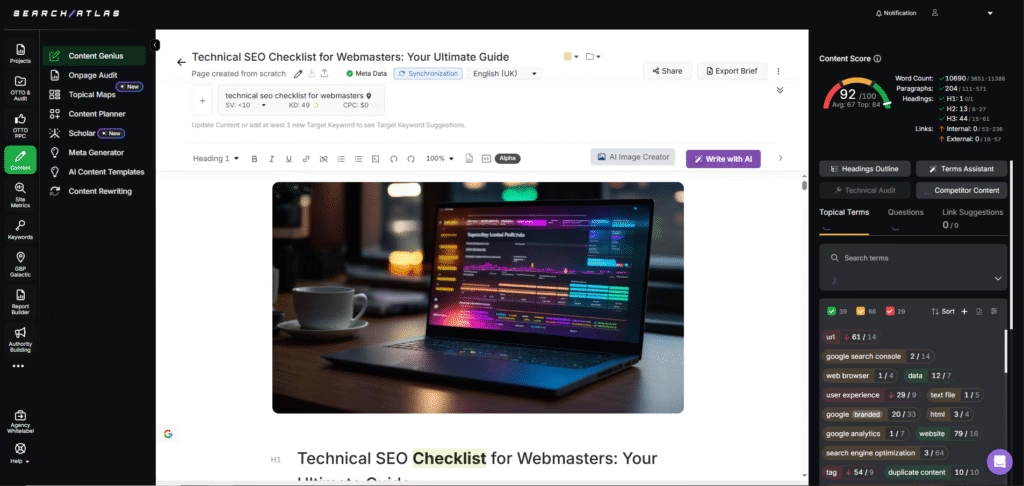
The key is to integrate them naturally and add them to key positions. If you’re forcing a keyword in where it doesn’t belong, it’s better left out. Focus on answering related questions, covering subtopics, and using synonyms where appropriate.
Grouping Keywords for One Page or Multiple Pages
One mistake many content creators make is trying to rank a single page for too many unrelated keywords. Instead, group keywords based on shared intent and topic.
If two keywords share a similar meaning or lead to the same type of answer, they can likely be covered in one piece of content. But if the intent behind them is different—say, how to start a blog vs. best blogging platforms—you’re better off creating separate pages.
How Many Keywords Should Be in a Blog Post vs. a Landing Page?
The number of keywords depends on the page type and its purpose:
- Blog posts are typically longer and more informative. They can naturally include 1 primary keyword and 3-7 secondary or supporting keywords.
- Landing pages are usually more focused on conversion. Here, you want to stick closely to 1 main keyword and avoid cluttering the message with too many variations.
Keep in mind that keyword inclusion should never compromise clarity or user experience.
Keyword Planning for Pillar Pages vs. Cluster Content
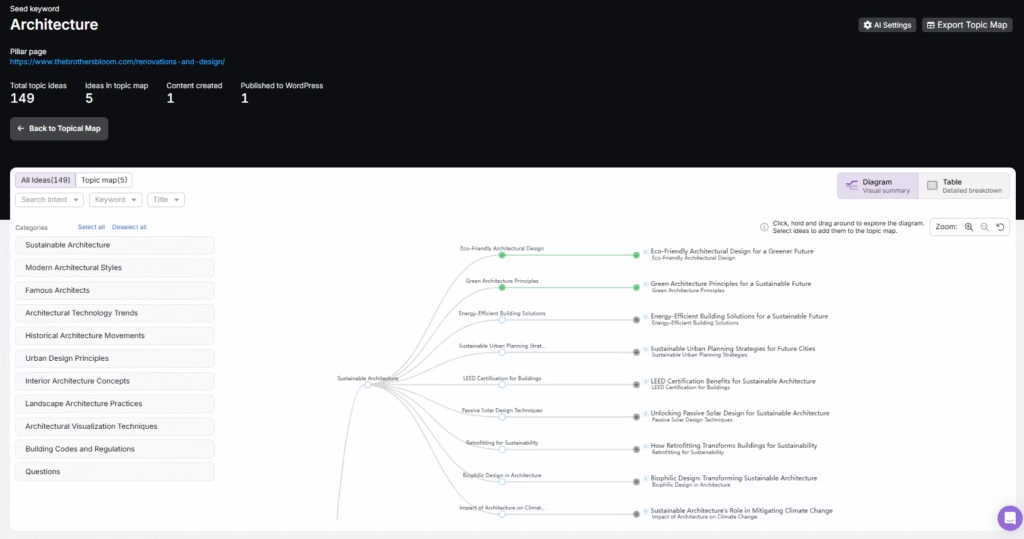
Pillar pages are comprehensive pieces that broadly cover a core topic. They’re ideal for targeting a wide range of related keywords. It’s not uncommon for a pillar page to include 8-15 well-chosen keywords that map to different sections.
Cluster content, on the other hand, dives deeper into specific subtopics. Each piece should have its own focus keyword and a few supporting terms. Together, your pillar and cluster pages create a strong semantic structure that signals authority to search engines.
Avoiding Keyword Cannibalization Through Smart Keyword Count
Keyword cannibalization happens when multiple pages on your site compete for the same or very similar keywords. This can hurt your rankings and confuse search engines.
You can prevent this by assigning unique primary keywords to each page. During your planning process, use a spreadsheet or SEO tool to map out which keywords belong where. This helps ensure you’re not unintentionally duplicating efforts.
Tracking Performance: Are You Targeting Too Many Keywords?
When your content isn’t performing well, it may be trying to target too many keywords at once. Pages that try to cover a wide range of topics often end up spreading their efforts too thin, ranking poorly for most of the terms they target.
To avoid this, track the performance of your content and see which keywords are actually driving traffic. If your page isn’t ranking for many of your targeted keywords, it could be time to narrow your focus or split the content into multiple, more targeted pages.
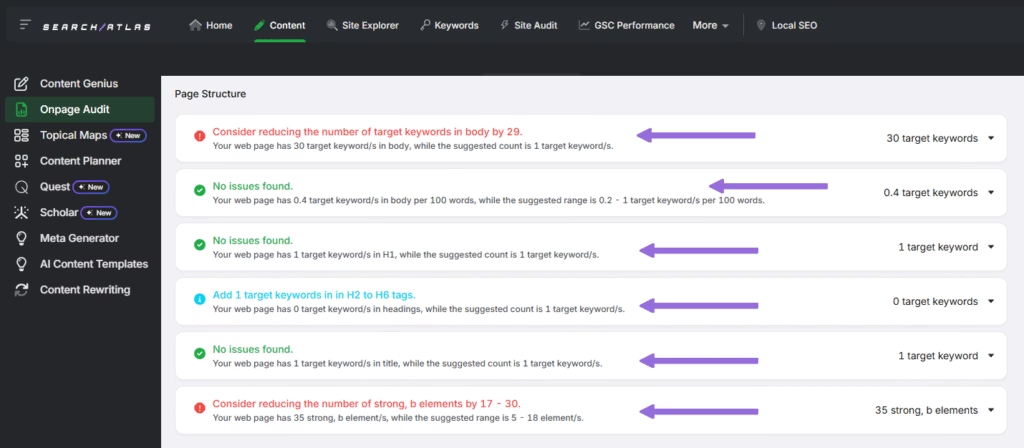
On-Page Audit Tools can be incredibly helpful in this process. They automatically analyze your existing content, checking for keyword overuse or under-optimization.
By identifying areas where your content might be too broad or misaligned with user intent, these tools help you make the necessary adjustments to focus on the most impactful keywords.
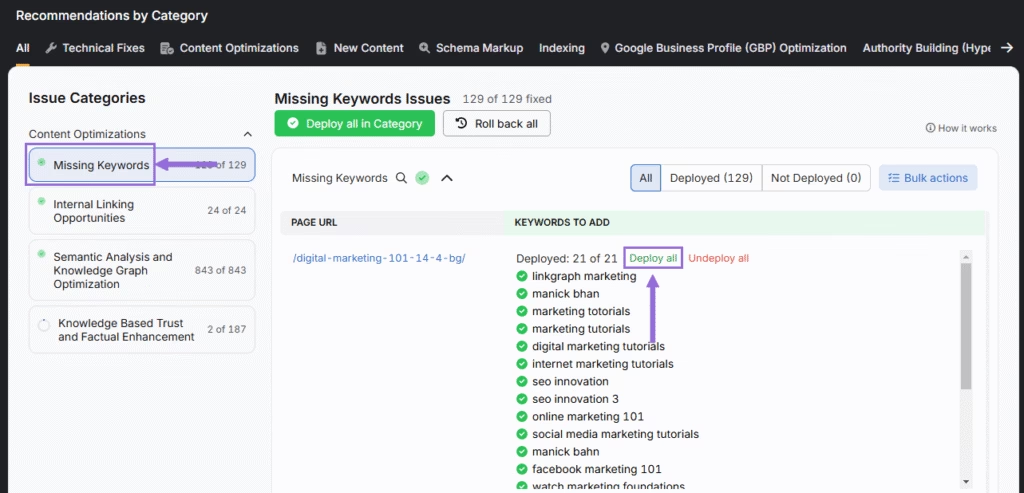
Additionally, AI SEO tools like OTTO SEO make it easy to assess which keywords your content is missing and suggest relevant keywords that align with your page’s purpose.
These tools provide automated audits and help you refine your content strategy by suggesting keyword adjustments and applying them in one click.
Search Atlas: Your Keyword Blueprint for Smarter SEO
So, how many keywords should you use per piece of content? Aim for one primary keyword and a handful of supporting ones that make sense contextually. Prioritize quality over quantity, and focus on aligning with search intent.
Rather than fixating on a keyword count, prioritize content that’s helpful and relevant. Search engines reward content that satisfies user needs.
For agencies looking to level up, Search Atlas offers AI-powered tools like content editors, topical mapping, and on-page audits to help you optimize for both search engines and users.
Try it today with a 7-day free trial and explore all the features, including personalized onboarding, tutorials, and more!