If your local SEO strategy hasn’t had a recent refresh, even a perfectly optimized Google Business Profile won’t save you if you miss the 2025 local SEO trends.
The truth is, local search is getting smarter—and local SEO tools are keeping up. Google now prioritizes genuine user experience over generic SEO tactics.
It analyzes search intent, interprets content more intelligently, and rewards businesses that truly understand their local audience. This is what the latest local SEO trends are all about.
Want to know what these trends are and how they can help your business shine? ✨
We’ve mapped out the 9 most important local SEO trends for 2025, with clear, actionable steps to make them work for your business.
Come explore with us! 🔍
What Are Local SEO Trends?
Local SEO serves as the digital equivalent of a storefront, enabling businesses to be found by potential customers searching for services within their geographic area.
This focused strategy diverges from traditional SEO by integrating location-based factors to connect businesses with the right audience at the right time.
Over time, local SEO trends have evolved from simple directory listings to intelligent, context-driven search optimization. These innovations are transforming how:
• Businesses appear for hyper-relevant searches
• Customers experience local discovery
• Physical and digital visibility merge
But what’s driving this transformation? The next section explores how local SEO trends are shaping strategy in 2025.
How Local SEO Trends Transformed Strategies in 2025
AI and machine learning advancements have transformed how search engines interpret queries, shifting from basic keyword matching to intent-based results.
Search engines have moved far beyond basic keyword recognition, now focusing on understanding the precise context of a user’s location.
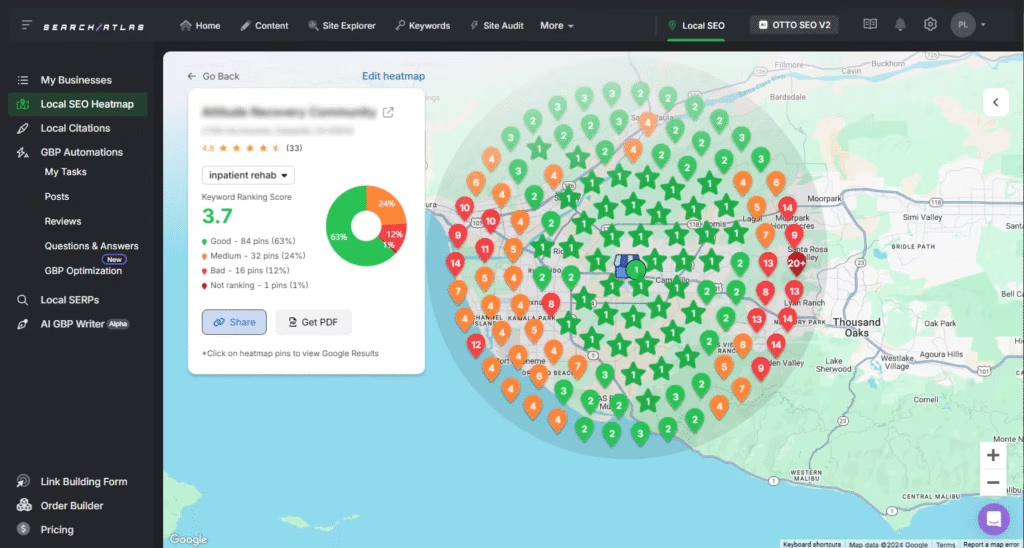
For instance, a late-night search for “urgent locksmith” triggers results tailored to your exact location and urgency, even without location terms. AI processes contextual information, while machine learning adjusts rankings based on user interactions.
This transition from keyword reliance to intent-driven optimization means businesses must focus on relevance and user needs rather than simple keyword placement.
Benefits of Local SEO trends Transformation
AI-driven local SEO provides significant advantages for businesses looking to enhance their search presence:
- Increased Foot Traffic: Local SEO trends help businesses connect online searches with in-store visits.
- Stronger Engagement: Businesses must create content that addresses specific local needs.
- Precision Targeting AI helps search engines understand the context of local searches, ensuring businesses appear when and where needed.
- Enhanced Relevance: Machine learning refines rankings based on user behavior, making results more relevant.
Businesses that embrace these local SEO trends show up exactly when and how local customers need them, standing out in a competitive market.
9 Local SEO Trends to Boost Your Rankings (Don’t Miss)
To ensure you stay ahead in local search results and attract the right customers, here are the most important local SEO trends you should be incorporating into your strategy:
1. Mobile-First Indexing
With 63% of web traffic coming from mobile devices, Google now prioritizes mobile-friendly websites in its rankings.
If your site isn’t optimized for mobile, visitors may leave frustrated and turn to a competitor instead. To improve rankings and user experience, focus on:
- Responsive Design: Ensure your site adapts to all screen sizes, with images, text, and buttons adjusting seamlessly. Consistency between mobile and desktop content is key.
- Page Speed Optimization: Slow-loading sites hurt rankings and user experience. Compress media files, enable lazy loading, and use efficient coding practices.
- Optimized Images and Media: Use next-gen formats like WebP for faster-loading images and minimize intrusive pop-ups to keep visitors engaged.
Conduct a site audit to identify issues, ensure all pages perform well, and help your business appear in local search results.
2. Voice Search Optimization
With smart assistants like Siri, Alexa, and Google Assistant becoming part of daily life, voice search has become a go-to method for finding information, with 50% of consumers using it daily.
Local searches, in particular, rely heavily on voice queries as people look for nearby businesses, restaurants, and services while on the go. To optimize for this shift:
Prioritize conversational search phrases
Voice searches tend to be full sentences or questions rather than short phrases. Instead of searching “best Italian restaurant Seattle,” a voice user might ask, “Where can I find the best-reviewed Italian restaurant in Seattle?”
To align with this shift, look for long-tail keywords, focus on how people naturally speak rather than how they type, and structure your content in a more conversational tone and incorporate natural language patterns.
Focus on question-based queries
People using voice search often phrase their queries as questions, beginning with words like “how,” “what,” “where,” “why,” and “when.” If you want your business to appear in voice search results, optimize for these question-based keywords.
To identify the questions your customers are asking, use a Keyword Magic Tool to find relevant variations and optimize your content accordingly.
Provide direct answers to voice search questions
Answer frequently asked questions clearly and concisely on your website. You can do this by:
- Adding an FAQ section that directly addresses common customer questions.
- Using blog posts to provide in-depth answers to specific voice search queries.
- Structuring content with headings that include natural, question-based keywords.
3. Hyper-Local Targeting
Hyperlocal marketing integrates your brand into the community by aligning messaging with what matters most to local customers.
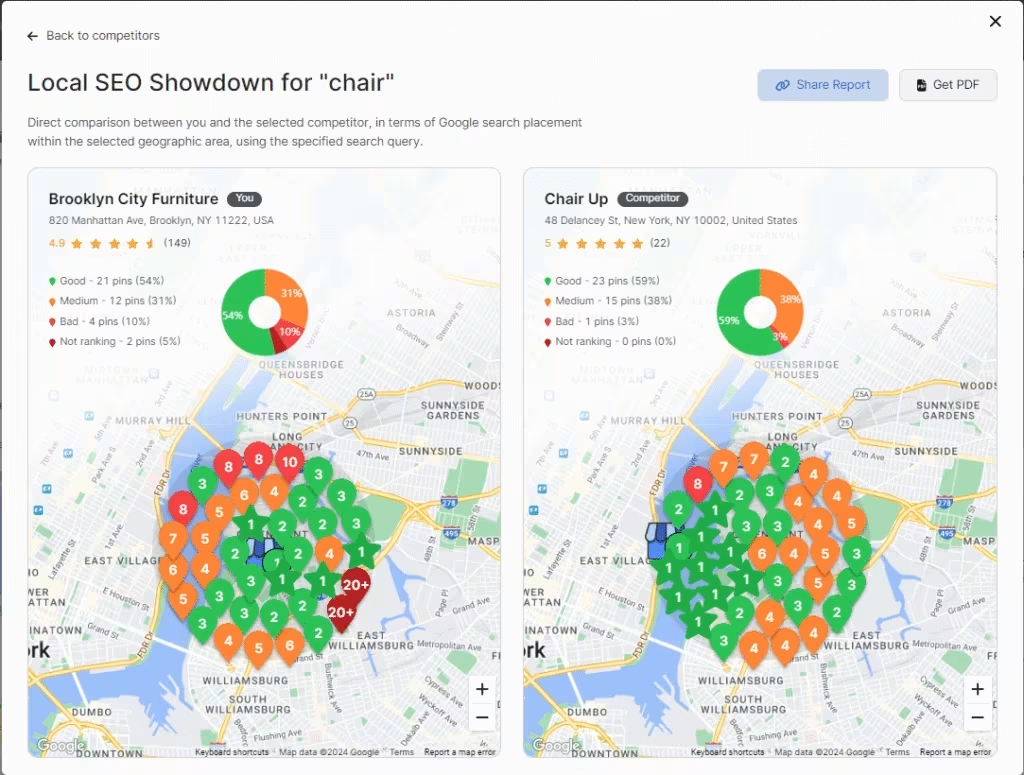
Local businesses can appear in nearby searches when potential customers are actively looking for their products or services by focusing on a specific geographic area
This strategy turns online interest into real-world visits, driving foot traffic and boosting conversions.
- Regional Keyword Data: Analyze keyword trends at a regional level to tailor your content to local searches. Access regional keyword data for specific locations to understand whether keywords present good local SEO ranking opportunities.
- Location-Based Offers: Implementing location-based promotions can lead to a significant increase in foot traffic and conversions.
4. Create Product, Service, and Location Pages
A well-structured website makes it easier for visitors to find what they need, stay engaged longer, and come back for more.
If you run a local business, each product or service deserves its own page, ensuring clarity and better keyword targeting. Here are the best practices for creating local pages:
- Location-Specific Pages: If your business spans multiple locations, dedicated pages boost local rankings and let you provide key details like directions, contact info, and area-specific promotions.
- GBP Integration: Link each location page to its Google Business Profile (GBP) to enhance local relevance and improve user experience.
- Structured Data for SEO: Implement schema markup for products, services, and locations to give search engines better context and increase visibility in search results.
5. Local Schema Markup
Structured data helps search engines accurately interpret your business details, ensuring the right information appears in search results.
The more structured data you provide, the less chance for Google to misinterpret or miss important details about your business.
Schema markup can be applied to details like address, hours of operation, and services:
- Business Schema on Homepage: This clearly defines your business name, address, and contact details, making it easy for search engines to gather key information about your business directly from your homepage.
- Product Schema for E-Commerce: Helps product pages stand out in search results by providing essential details such as price, availability, and reviews, which can increase your visibility and click-through rates.
- FAQ Schema: Incorporating this schema can make your frequently asked questions more visible in search results, improving your chances of being seen and engaged by potential customers.
Schema markup reinforces your page’s authority, signaling that it contains trustworthy and accurate details. This ensures that Google indexes the right information without errors.
6. Google Business Profile Optimization
Google prioritizes local businesses in search results, using information from Google Business Profile to showcase relevant options. Here’s how you can improve your GBP ranking:
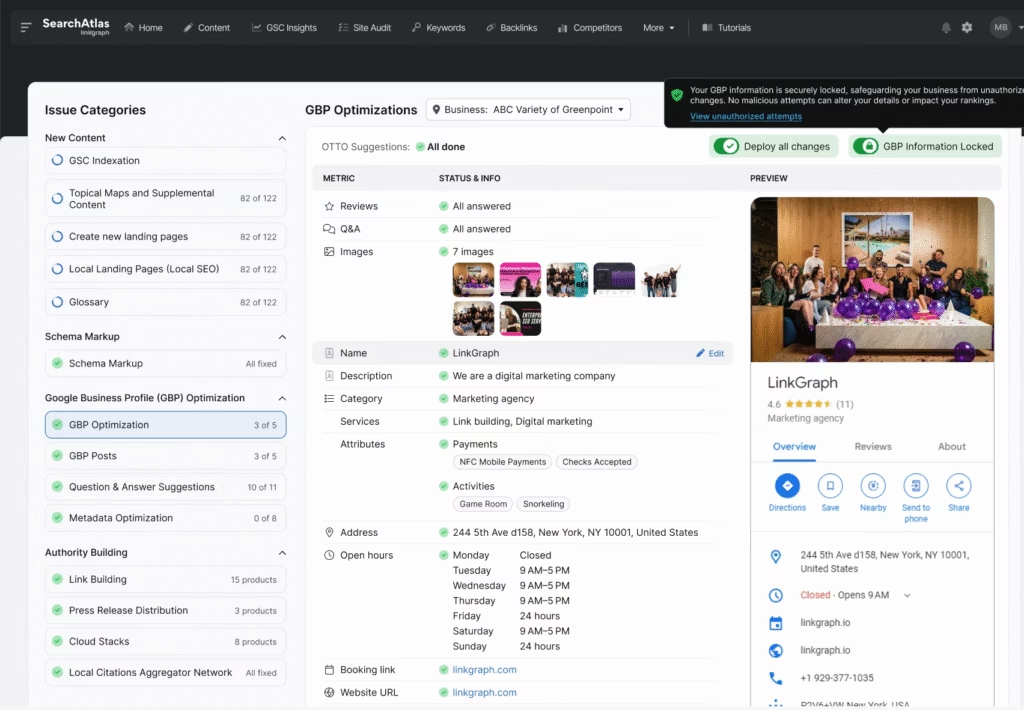
- Complete Every Section: Ensure that your business profile has complete and accurate information, including business details, categories, and services. A fully filled-out profile increases the chances of appearing in relevant local search results.
- Keep Hours Up to Date: Always keep your business hours updated. If they change, make sure to adjust them promptly to avoid frustrating customers who may show up at the wrong time.
- Post Regularly: Posting updates keeps your listing active and gives you more opportunities to integrate relevant local keywords, improving your visibility in search results.
A fully optimized Google Business Profile helps increase your visibility in search results and Google Maps, making it one of the most powerful tools for local SEO.
While it might seem like a quick way to boost your ranking, adding keywords to your business name can actually harm your search visibility.
Google’s guidelines only allow you to use your legal business name, as it appears on official documents and signage.
Keyword-stuffing violates Google’s anti-spam policies and can result in penalties, such as reduced visibility or even profile suspension. To avoid these risks, make sure your business name is accurate and compliant with rules.
7. Localized Content Marketing
Creating content that resonates with your local audience strengthens your brand’s connection with the community and boosts your local search presence.
Whether it’s covering neighborhood events, highlighting local news, or sharing community stories, localized content makes your business more relevant to nearby customers.
- Use Local Keywords Naturally: Research location-specific search terms and integrate them seamlessly into your content.
- Cover Local Events and News: Show involvement in the community by writing about upcoming events, partnerships, or local developments.
- Provide Neighborhood-Specific Insights: Share unique guides, business spotlights, or resources tailored to your area to attract hyperlocal traffic.
Generative AI can further enhance your strategy by creating geographically targeted content that resonates with local interests, ensuring your SEO efforts are truly relevant to the local communities.
8. Local Backlinks and Citations
Citations and backlinks each play unique yet interconnected roles in boosting your local SEO efforts, enhancing both credibility and engagement.
Citations establish the legitimacy of your business by ensuring consistent and accurate information across the web, while backlinks help build domain authority through quality referrals.
To stay ahead in local SEO, prioritize quality, relevance, and organic link-building strategies:
- Use High-Authority Directories: List your business in trusted local and industry-specific directories.
- Earn Organic Backlinks: Create valuable content and build partnerships instead of buying low-quality links.
- Leverage Local Media: Collaborate with news sites, blogs, and business associations for authoritative backlinks.
- Maintain NAP Consistency: Ensure your Name, Address, and Phone Number match across platforms.
9. Customer Reviews Will Drive Visibility
Customer reviews have always been crucial for building credibility, but in 2025, they’ll play an even larger role in local search rankings.
With 75.5% of consumers trusting online reviews when making purchasing decisions, search engines now prioritize businesses with strong ratings and active review engagement.
Encouraging satisfied customers to share their experiences. Turn customer reviews into a powerful asset:
- Aim for Both Volume and Depth: Instead of simply collecting more reviews, encourage customers to leave thoughtful, detailed feedback that reflects their experience.
- Engage with Every Review: Responding to both positive and negative reviews shows you value customer feedback. Thoughtful replies can boost engagement on your GBP and even turn negative comments into constructive conversations.
- Diversify Your Review Platforms: Google reviews are a must, but gathering feedback on other trusted platforms strengthens your overall online reputation.
To simplify this process, GBP Management Software can help streamline review management, automate responses, and efficiently handle multiple locations from a single dashboard.
Power Your Strategy With Local SEO Trends in 2025
With businesses competing for visibility in every ZIP code, simply knowing the latest local SEO trends isn’t enough—you need to execute them strategically. 📈
So what’s the real edge? Automation. AI-driven insights. Strategy that adapts in real time. Search Atlas!
- Gain deep insights into your site’s performance across specific locations with regional search data.
- Fine-tune your content strategy using localized insights to rank higher in cities, neighborhoods, and key search terms.
- Quickly generate SEO-optimized, location-specific content, then customize it to match your brand, audience, and business goals.
Whether managing citations, analyzing competitors, or maximizing your Google Business Profile, Search Atlas ensures every move you make is data-driven and impactful.
But wait—here’s how you take control: OTTO SEO 🤖✨
This AI-driven agent keeps your content fresh and competitive by analyzing top-ranking search results and automatically updating your pages.
This all-in-one platform allows you to easily optimize, track, and refine your local SEO strategy in a single, intuitive dashboard.
Stop following trends and start using them to your advantage. Try Search Atlas free today. No risk. No commitment. Just results. 🚀