Backlinks remain a core ranking factor, yet their page-level impact continues to spark debate. Most recommendations rely on domain-wide patterns instead of direct evidence showing what occurs when a specific page gains a link. The study addresses that gap. Researchers examined 350,159 backlink placements across 13,002 landing pages to measure search engine optimization (SEO) outcomes before and after each link went live.
High-Domain Power backlinks consistently outperformed others, increasing rankings, traffic, impressions, and keyword count. Anchor text relevance proved decisive. The report explains which backlinks drive measurable results and why link quality varies widely.
How do High-quality Backlinks Affect the SEO of a Page?
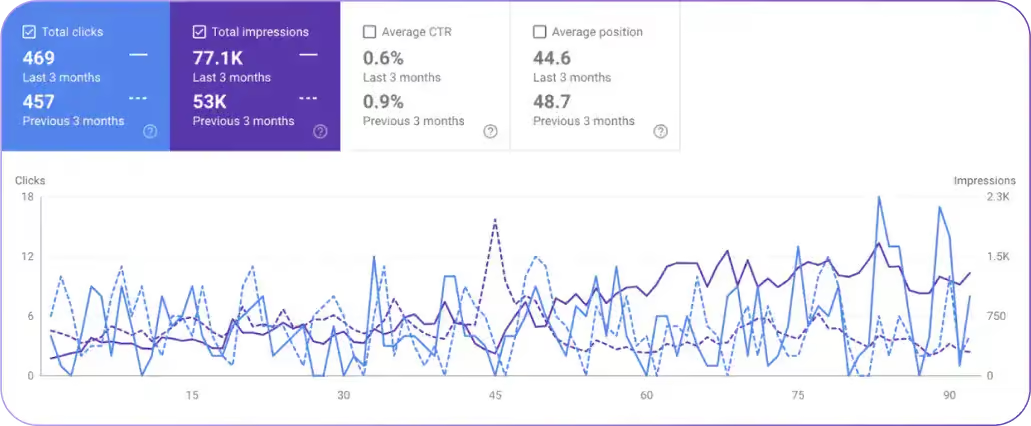
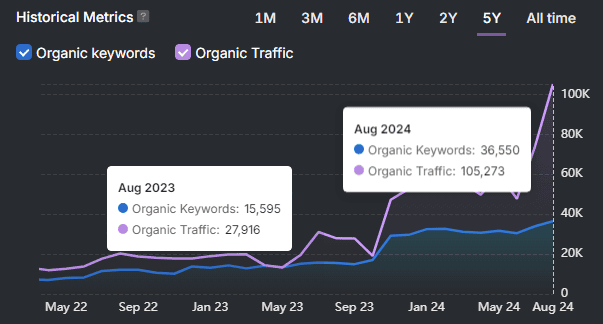
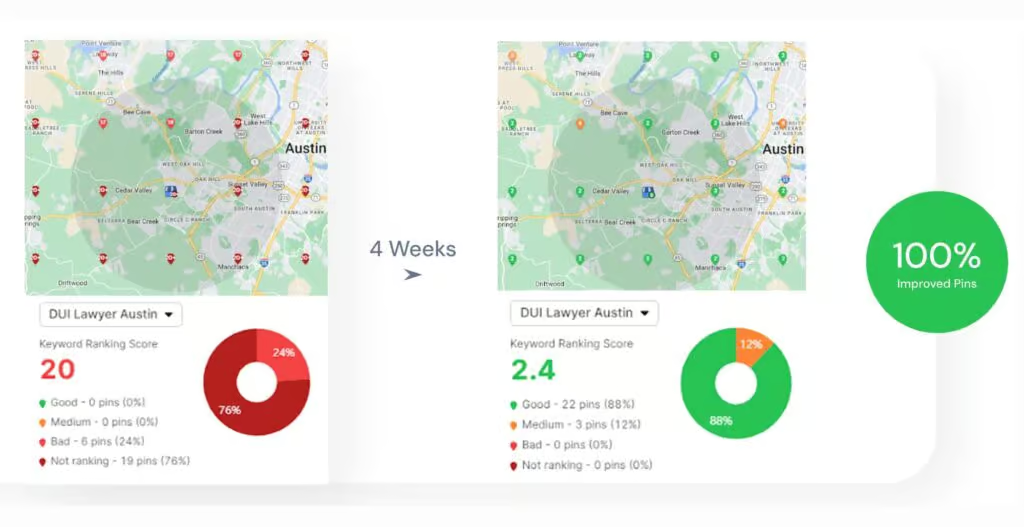
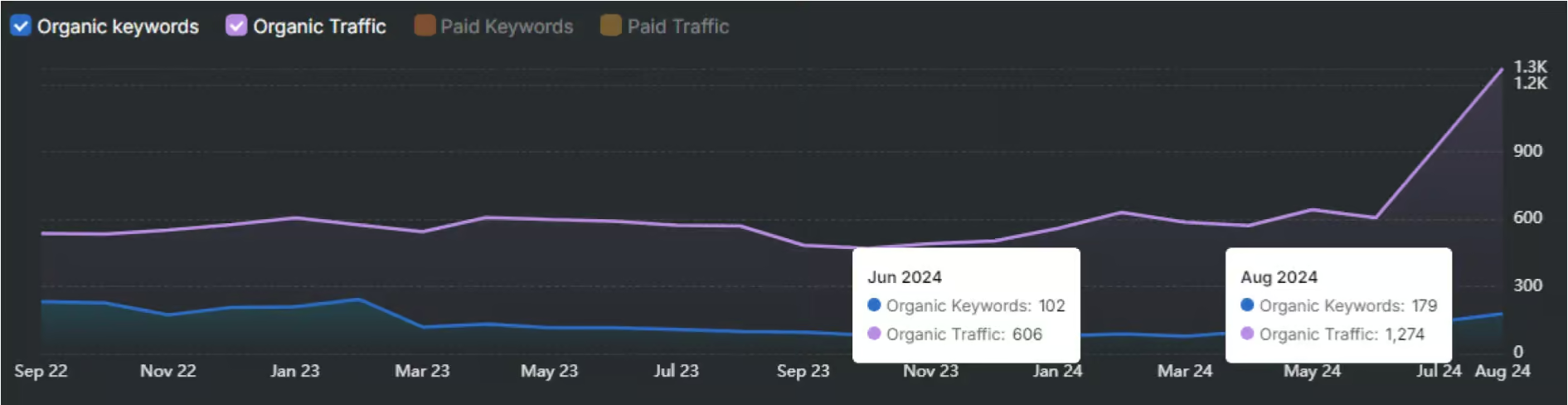
The analysis set out to determine the true impact of backlinks at the individual page level. Results showed that high-quality backlinks improved performance across all major SEO metrics. The results are listed below.
- 150% rise in keyword rankings
- 275% increase in search impressions
- 14% growth in organic traffic
- 3.5-place improvement in in average search position
Not all backlinks produced the same effect. Referring domain quality strongly influenced outcomes. Domain Power (DP), a proprietary metric measuring trust, link velocity, and historical lift, emerged as the most reliable predictor of SEO improvement. DP outperformed widely used metrics such as Domain Authority (DA) from Moz and Domain Rating (DR) from Ahrefs.
How Does Anchor Text Amplify Backlink Effectiveness?
Anchor text relevance acts as a performance multiplier. Links containing semantically aligned anchor text achieved greater search visibility and stronger ranking gains compared to links using branded or generic terms. The evidence shows that SEO growth depends on securing backlinks from trusted, high-impact domains with contextually relevant anchor text. Quantity alone does not deliver sustainable results; quality determines long-term impact.
How Is the Backlink Impact Measured?
Researchers analyzed 350,159 backlink placements across 13,002 unique landing pages. Each placement was paired with pre- and post-link page metrics. The researchers tracked 3 indicators using Google Search Console (GSC). The 3 indicators are listed below.
- Search impressions
- Average position
- Ranking keywords
Each referring domain was assessed using 3 authority measures. The authority measures are listed below.
- Domain Power (DP): a proprietary Search Atlas metric that measures trust, link velocity, and historical lift
- Domain Rating (DR): from Ahrefs
- Domain Authority (DA): from Moz
To improve accuracy, the analysis excluded extreme outliers and grouped domains into percentile ranges (20 to 30, 30 to 40, etc.) for tiered comparisons. A four-step approach isolated performance gains. The four-step approach is listed below.
- Descriptive comparisons measuring before-to-after changes in traffic, rankings, and impressions
- Wilcoxon Rank-Sum tests confirming statistical significance
- Regression models quantifying the influence of DA, DR, and DP on page-level outcomes
- Machine learning (XGBoost) identifying deeper patterns and feature importance
A semantic relevance analysis then evaluated the alignment between anchor text and target-page keywords, revealing its effect on rankings. The layered process identified which backlinks improved SEO performance and why they worked.
What Happens After Link Placement?
Backlink placements produce measurable SEO gains at the page level and the pages that received new backlinks are achieved. The SEO gains are listed below.
- 149.9% growth in ranking keywords
- 275% increase in Google Search impressions
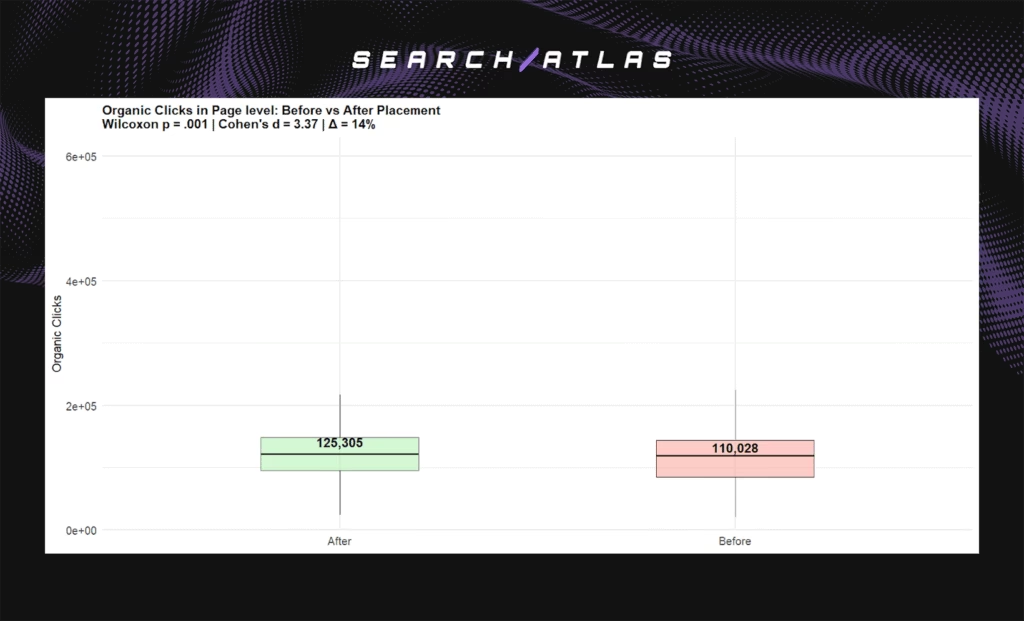
- 14% rise in organic traffic
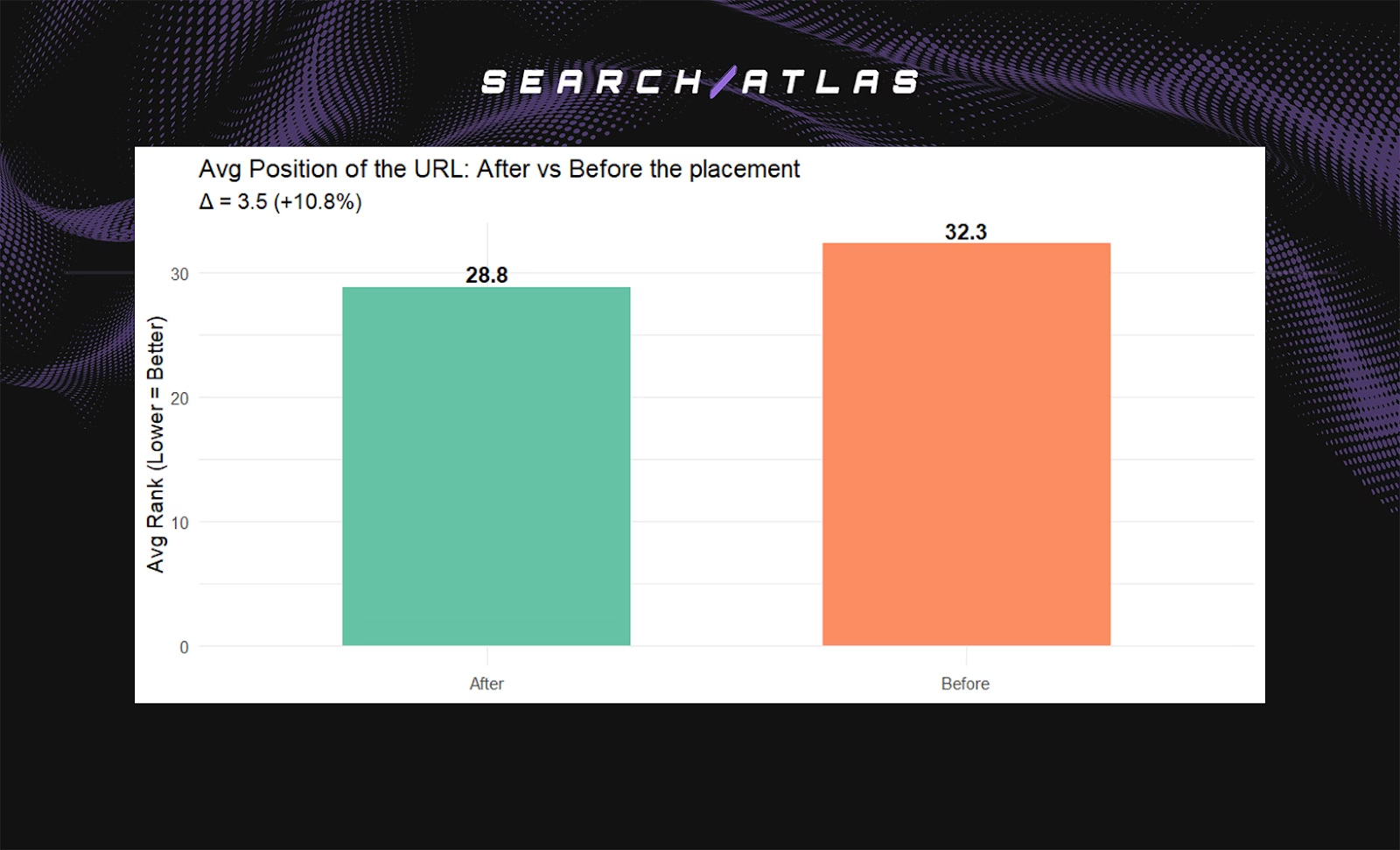
- 10.8% improvement in average position
These results were statistically significant for every metric.
Keyword Growth Was the Most Consistent Lift
Pages expanded from a median of 12 ranking keywords to 30 after backlink placement, more than doubling topical reach. The effect measured large in size (Cohen’s d = 3.37) and reached strong statistical significance (p < 0.001).
Visibility Exploded
Google Search impressions climbed from about 20 million to about 75 million per page on average, representing a 275% jump. Pages appeared more frequently for a broader range of queries after receiving backlinks.
Click Gains Were More Modest
Organic clicks rose 14% after link placement. Although the increase was smaller than that of impressions or keywords, it reflected stronger discoverability and higher click frequency, especially when paired with improved rankings.
Average Positions Improved by 3.5 Spots
Before backlink placement, pages averaged position 32.3 in Google Search results. After placement, that improved to 28.8, representing a 10.8% lift. The improvement significantly boosted click-through potential for pages near page two.
Why Link Quality Outperforms Link Volume
The analysis compared backlink quality by evaluating referring domains using three authority metrics: DA from Moz, DR from Ahrefs, and Domain Power, a proprietary signal measuring trust, link velocity, and historical lift. All three correlated with post-placement gains, but DP consistently predicted SEO performance with greater accuracy.
Domains were grouped into percentile ranges (20 to 30, 30 to 40, up to 90 to 100). DP showed the clearest trend: backlinks from domains in the 90 to 100 DP range generated the highest traffic gains and the greatest improvements in average position. DA and DR produced measurable benefits mainly at their highest tiers, with less consistent results.
Pages with multiple backlinks followed the same pattern. One backlink from a high-DP domain delivered stronger results than several backlinks from lower-DP domains. Link-building strategies that emphasize quantity over quality often plateau or underperform. The largest gains occurred when pages received fewer backlinks from authoritative, trusted, and contextually relevant domains.
How Anchor Text Relevance Affects Rankings
The analysis measured how closely backlink anchor text matched the keywords for which each landing page ranked. Researchers applied semantic similarity techniques to compare the meaning of anchor phrases to the actual search terms associated with each page. Stronger alignment produced higher rankings.
Before backlink placement, the average semantic similarity score between anchor text and page-level keywords measured 0.415. After placement, the score rose to 0.703, a 69.6% increase in topical relevance. The improvement demonstrated that effective link building depends on both domain strength and contextual alignment.
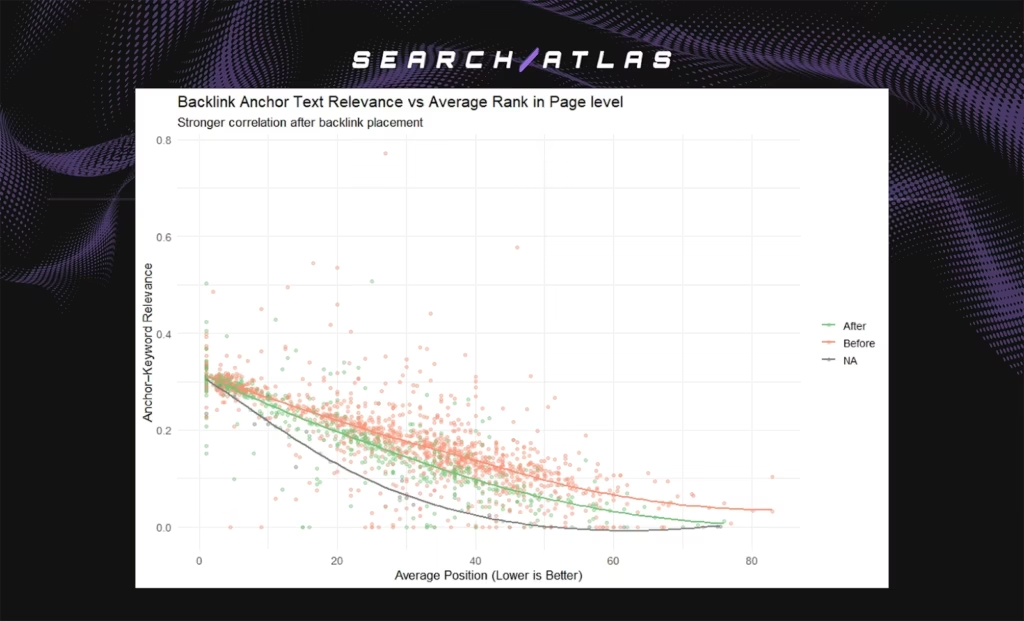
Anchor text alignment influenced ranking performance. The correlation between anchor relevance and Google position improved from −0.75 to −0.86 after placement, meaning that greater relevance corresponded to higher rankings. The coefficient of determination (R²) increased from 0.564 to 0.745, confirming that semantic alignment explained a larger share of ranking variation after receiving backlinks.
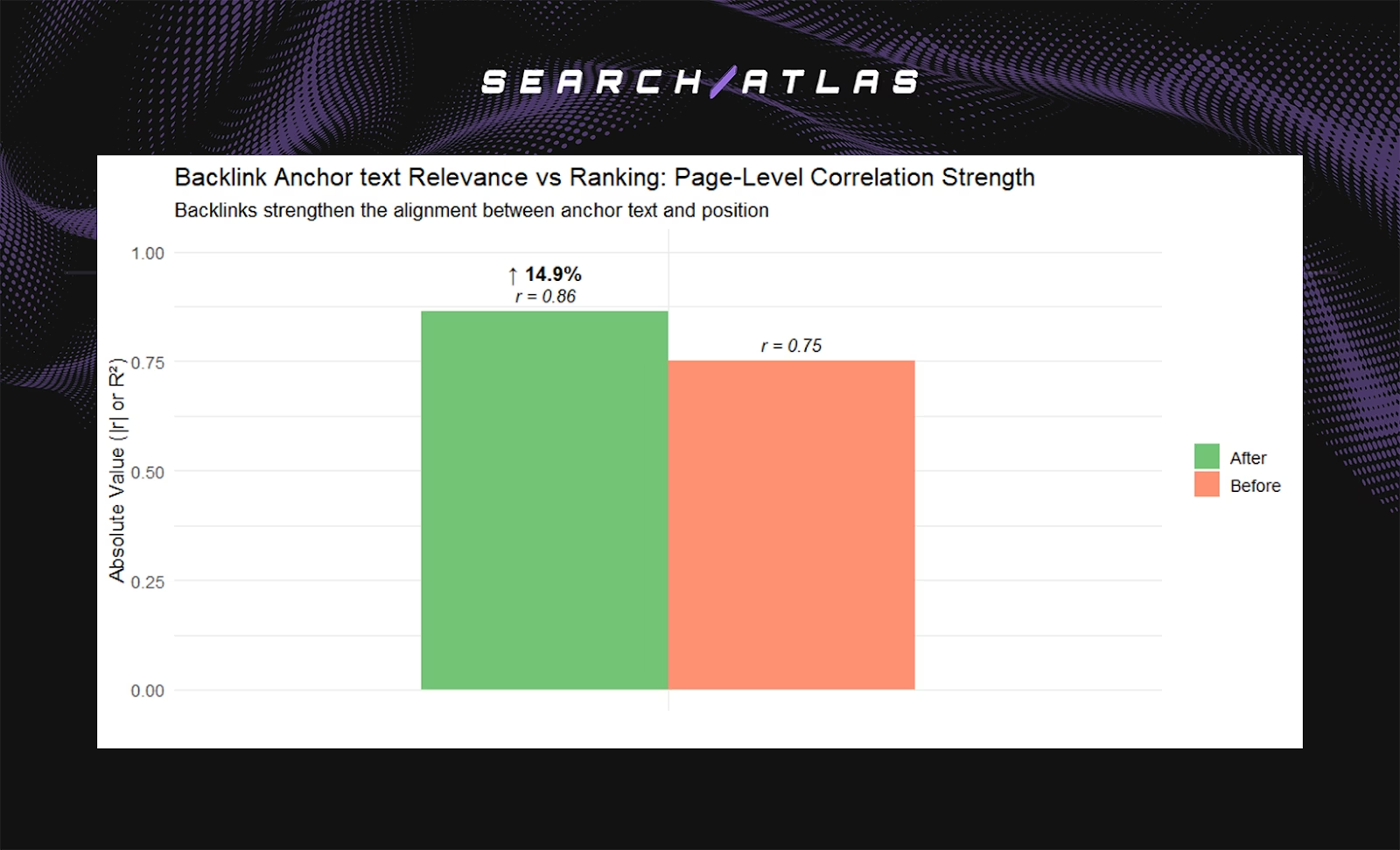
The pattern revealed that the highest-performing backlinks came from strong domains and used anchor text reflecting the search intent of the target page. Pages with generic or loosely related anchors underperformed. Pages with anchors tightly matched to their topic gained higher rankings.
Which Authority Metric Predicts SEO Outcomes Best
The study evaluated three authority metrics to determine which best predicted SEO results: DP, from Search Atlas, DR from Ahrefs, and DA from Moz. Researchers compared how well each metric predicted changes in organic traffic, impressions, and average ranking position.
Before backlink placement, DP already outperformed DR and DA in predicting page-level gains. After placement, the advantage widened. DP maintained stronger correlations across all outcomes, while DR and DA lost predictive influence.
For traffic prediction, DP’s feature importance rose from 0.374 to 0.439. For ranking position, DP’s score climbed from 0.419 to 0.559. DR and DA declined in both categories, confirming that they measured less of the actual lift produced by backlinks.
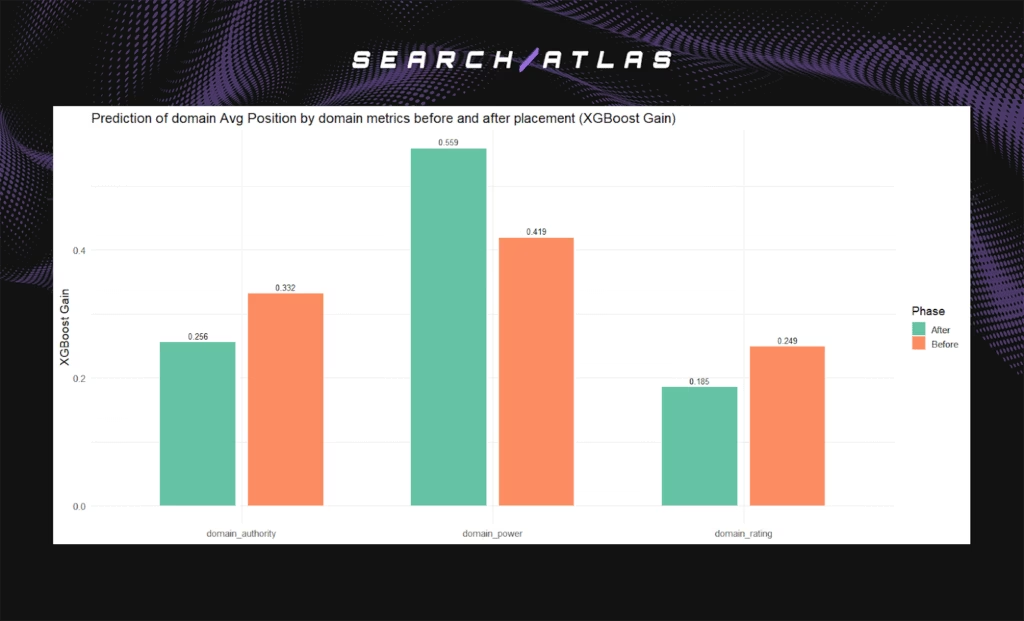
Impression prediction followed the same trend: DP ranked highest, while DR and DA offered lower predictive value after placement. DP’s advantage comes from its construction. DR and DA measure raw link profile strength, while DP incorporates link velocity, diversity, and historical SEO impact. The design captures both potential and realized results.
For SEO professionals choosing domains to target, the data provides a clear directive. Domain Power is the most dependable signal for forecasting SEO gains from backlinks because it reflects actual improvements in visibility, rankings, and traffic, rather than link count alone.
Put Domain Power to Work for Your Rankings
Domain Power is reshaping link-building strategy. Explore our Domain Power article to learn how to use it in Search Atlas to start targeting links that deliver real SEO results.

Founder CEO/CTO